
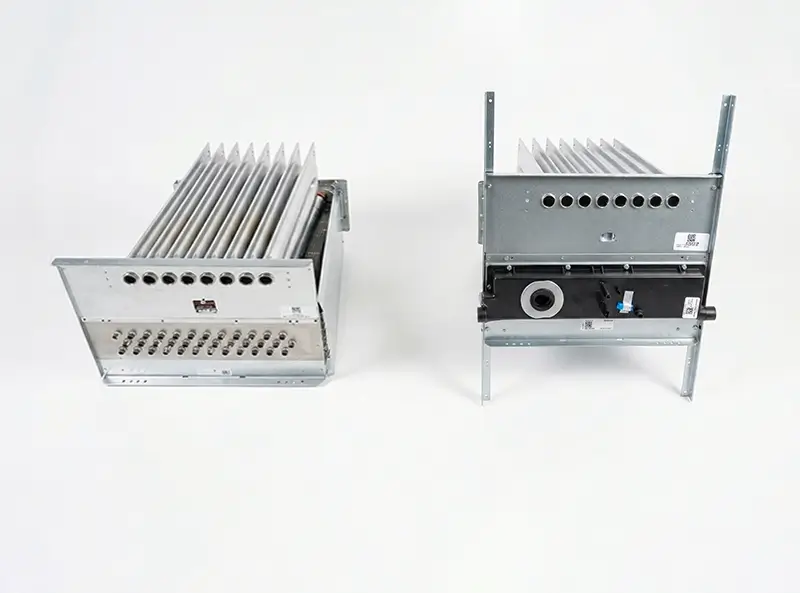
Calgary’s climate puts extra strain on heat exchangers. Furnaces run hard from October to April and cycle often during sudden temperature changes, causing the metal to expand, contract, and wear more quickly than in milder regions. As a result, Calgary experiences a higher-than-average rate of premature heat exchanger failure.
Need a New Furnace?
With Flexible Financing Options

5 Common Causes of Heat Exchanger Failure in Calgary Winters
A furnace heat exchanger is the internal component that safely transfers heat from the combustion process into your home’s air, without letting exhaust fumes mix with your indoor air. For homeowners unfamiliar with how it works, here’s a reputable technical explainer from American Standard on the function and importance of a heat exchanger:
1. Age & Metal Fatigue from Years of Heating Cycles
Every time your furnace fires up, the metal inside the heat exchanger expands. When it shuts off, the metal contracts. After thousands of cycles, especially during Calgary’s long heating season, this “thermal stress” becomes the leading cause of cracking.
Most heat exchangers last 12–18 years in Calgary. After 20 years, failure becomes highly likely.
2. Restricted Airflow or Blocked Filters/Vents
Poor airflow is one of the fastest ways to overheat a heat exchanger. In Calgary homes, the common culprits are:
- Dirty furnace filters
- Closed or blocked supply vents
- Undersized or dirty ductwork
- Return-air restrictions in renovated homes
When the furnace can’t push enough air across the heat exchanger, temperatures spike, metal weakens, and tiny stress fractures develop.
3. Improper Furnace or Ductwork Sizing
A furnace that is too large or too small for the home causes excessive cycling and overheating.
This is common in older Calgary neighborhoods where homes were renovated or expanded without a proper HVAC load calculation.
Oversized furnace → short cycling → repeated overheating → early heat-exchanger failure.
Undersized furnace → long runtimes at high temperature → metal fatigue
4. Corrosion and Rust from Moisture or Combustion Issues
Corrosion is another major reason heat exchangers fail early. The main causes include:
- High-efficiency furnace condensate problems
- Poor venting or backdrafting
- Basement humidity or water leaks
- Chemical contaminants (from paints, cleaners, or stored products nearby)
Corroded metal becomes brittle and is more likely to crack under heat stress.
5. Lack of Routine Maintenance and Missed Warning Signs
Most heat-exchanger cracks don’t happen suddenly, they develop over years. Annual maintenance allows HVAC technicians to detect:
- Abnormal burner flame patterns
- Hot spots or heat-stress marks
- Rust formation
- Draft or venting issues
- Early-stage micro-cracks
Without maintenance, these problems often go unnoticed until the exchanger fails completely.
Signs Your Heat Exchanger May Be Failing (Important Safety Red Flags)

Homeowners should watch for several warning signs that often point to a failing or cracked heat exchanger. These include a yellow or wavering burner flame, soot buildup near the furnace or venting, and an unexplained rise in monthly gas bills. You may also notice a chemical or metallic smell during furnace operation, the furnace shutting off more frequently than normal, or loud banging and popping noises when the system ignites. Visible rust, cracks, or discoloration around the heat exchanger area are also major red flags that require immediate professional attention.
Repair or Replacement Cost Considerations
A failing heat exchanger can lead to costly repairs or even full furnace replacement, so understanding typical pricing in Calgary helps homeowners make informed decisions. Below is a quick breakdown of what you can expect for inspections, repairs, and replacement scenarios.
Heat Exchanger Repair & Replacement Costs in Calgary
| Service / Scenario | Typical Cost Range | Notes |
| Diagnostic Inspection | $99–$189 | Price varies based on diagnostic depth and combustion testing. |
| Heat Exchanger Replacement | $900–$2,500 | Higher for high-efficiency furnaces with multi-stage heat exchangers. |
| Full Furnace Replacement | $4,500–$8,500 | Depends on efficiency, installation complexity, and brand. |
When Replacement Is Recommended
| Condition | Why It Matters |
| Furnace older than 12–15 years | Systems near end-of-life often develop additional failures. |
| Multiple failing components | Indicates widespread wear, making repairs less cost-effective. |
| Need for high-efficiency upgrade | Reduces gas bills and improves safety in older Calgary homes. |
| Severe or spreading heat exchanger cracks | Causes shutdowns and poses safety risks. |

How to Extend Heat Exchanger Lifespan in Calgary Homes
To prevent premature heat exchanger failure in Calgary’s harsh winters, homeowners should follow a consistent maintenance routine. Start by replacing furnace filters every one to two months during peak heating season to maintain proper airflow. Keep at least 80% of your home’s vents open to avoid pressure imbalances that can stress the exchanger.
An annual furnace inspection before winter helps catch early issues, while properly sized and unrestricted ductwork ensures the system isn’t overworked. Managing basement humidity also protects metal components from corrosion. Avoid storing chemicals or solvents near the furnace, as vapors can damage the burner flame and internal parts.
Finally, address short-cycling problems right away, whether caused by thermostat issues, airflow restrictions, or an improperly sized system, to prevent excessive heat buildup inside the exchanger.
When to Call a Professional HVAC Technician
Call ASAP if you experience:
- Short cycling
- Yellow burner flame
- Visible rust or corrosion
- Strange smells during operation
- CO detector alerts
Only certified technicians can properly pressure-test, scope, or combustion-analyze a heat exchanger to determine whether repair or replacement is safest.
Frequently Asked Questions
How long does a heat exchanger last in Calgary?
Typically 12–18 years, but poor maintenance or frequent short-cycling can shorten its lifespan.
Can a cracked heat exchanger be repaired?
No. Alberta HVAC codes require replacement of the part or furnace for safety.
Is it safe to keep running a furnace with a crack?
No. Cracks risk carbon monoxide leaks and require immediate professional attention.
Will a new furnace improve energy efficiency?
Yes. Modern 95–99% AFUE furnaces lower heating costs and provide more consistent warmth.

Fast, reliable furnace repair in Calgary. We diagnose and fix all makes and models to restore your home’s warmth quickly and safely.
Keep your system running smoothly with a professional furnace tune-up in Calgary. We clean, inspect, and optimize for peak efficiency and safety.

Breathe easier with professional furnace duct cleaning in Calgary. Remove dust, debris, and allergens for cleaner air and better system performance.