
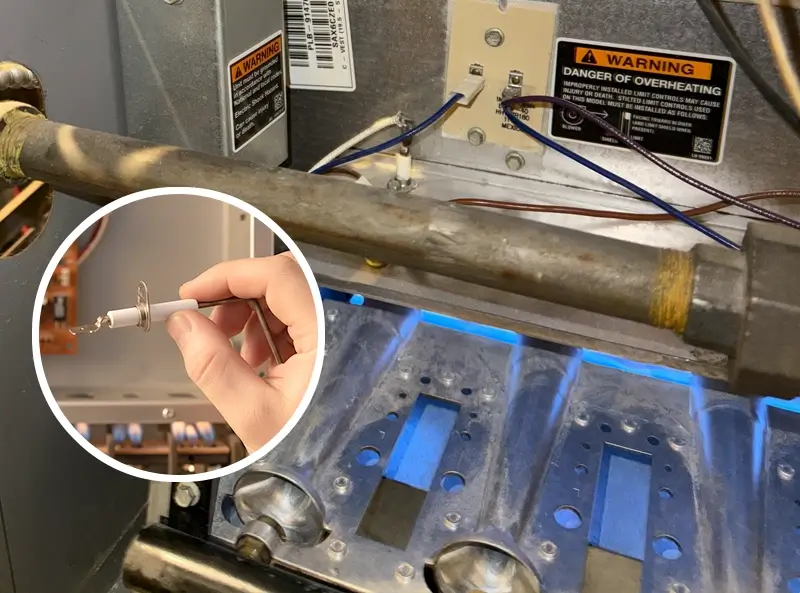
Flame sensors are small but essential parts of a natural gas furnace. Flame sensors act as safety devices, allowing gas to flow only when a flame is detected. In older Calgary homes, these sensors can fail more often, leading to furnace shutoffs, uneven heating, and potential safety risks. This article covers why flame sensors fail, how homeowners can maintain or troubleshoot them, typical repair or replacement costs in Calgary, and when to contact a professional.
Need a New Furnace?
With Flexible Financing Options
What Is a Furnace Flame Sensor?
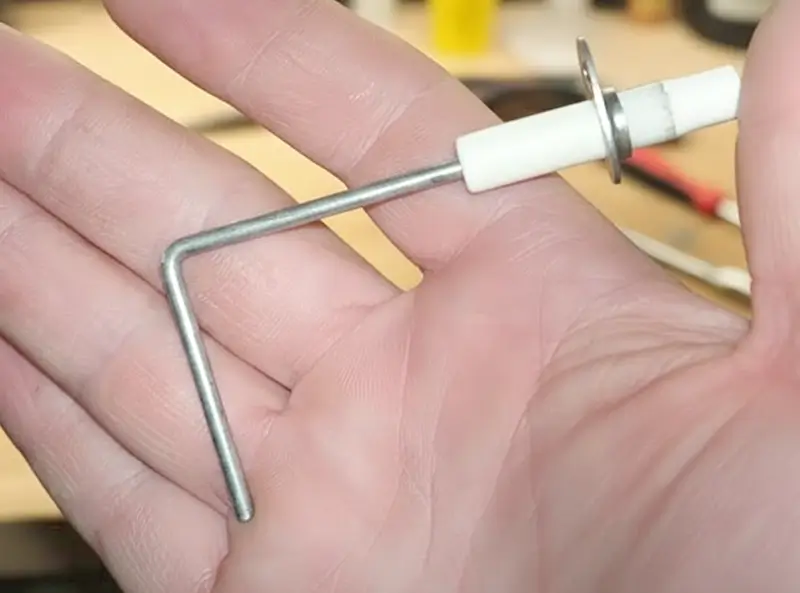
A flame sensor is a thin metal rod positioned in the furnace burner assembly. It detects the presence of a flame using electrical conductivity. If the sensor doesn’t detect a flame when gas is flowing, it signals the control board to shut off the furnace.
This safety feature prevents unburned gas from entering your home, reducing the risk of fire or carbon monoxide hazards. Flame sensors are small but vital, working closely with the ignition system and control board to keep your heating safe and reliable.
Common Causes of Flame Sensor Failure in Older Calgary Homes
Flame sensors in older Calgary homes are more prone to failure due to a mix of environmental factors, furnace wear, and furnace installation issues. Understanding these causes helps homeowners prevent repeated failures and maintain safe, reliable heating throughout the long winter months.
1. Dirt, Dust, and Soot Build-up
Calgary’s dry winters create more airborne dust that settles on furnace components. Over time, debris on the flame sensor prevents accurate flame detection and triggers shutoffs.
2. Corrosion or Wear
Older sensors may develop oxidation or metal degradation, reducing conductivity and causing intermittent or complete failure.
3. Improper Installation or Alignment
Aging furnace components can shift sensor position, resulting in misalignment with the burner flame and improper flame sensing.
4. Electrical or Control Board Issues
Faulty wiring, weak electrical signals, or control board problems can mimic sensor failure, causing repeated ignition lockouts or short cycling.
5. Frequent Cycling
Older furnaces often cycle more frequently, putting additional stress on the flame sensor and accelerating wear or soot accumulation.
Signs Your Flame Sensor Is Failing
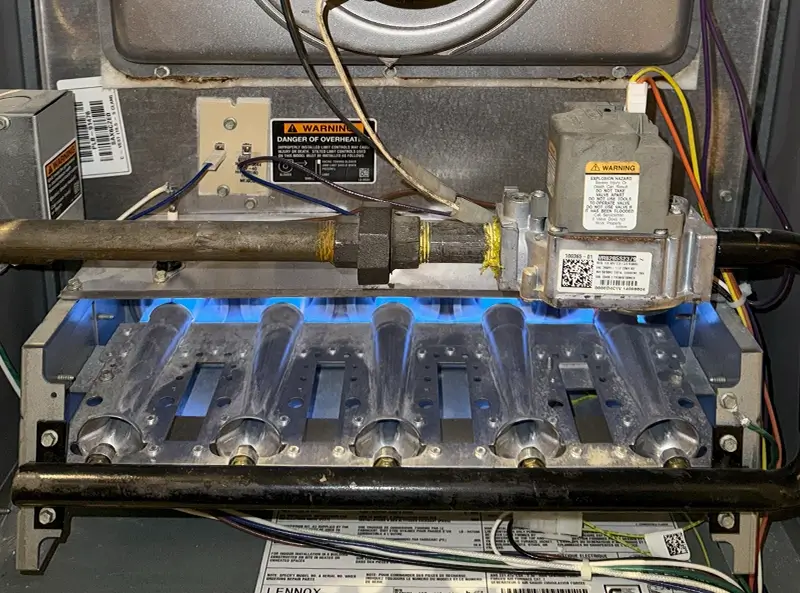
When your flame sensor is starting to give out, here are the signs you need to lookout for:
- Furnace shuts off shortly after ignition.
- Furnace cycles repeatedly without heating the home.
- Error codes on the thermostat or control board indicator lights.
- Intermittent heat output or delayed burner ignition.
Recognizing these signs early allows Calgary homeowners to schedule maintenance or repairs before mid-winter failures.
DIY Cleaning and Maintenance Tips
Many flame sensor issues are caused by dirt or corrosion that can be removed safely. Turn off power and gas to the furnace, then gently clean the sensor rod with fine sandpaper or a soft cloth. Avoid using harsh chemicals. Regular cleaning every 12–18 months in Calgary’s dry and dusty conditions helps maintain reliable operation. If cleaning doesn’t resolve the issue, professional replacement is recommended.
Repair and Replacement Costs in Calgary
Replacing a flame sensor typically costs between $150–$350, depending on furnace model and labor. Minor repairs or cleaning are less expensive, often under $100. In older furnaces, repeated sensor failures may indicate other component wear, and a technician may recommend full system inspection or replacement.
Professional Service and Safety Considerations
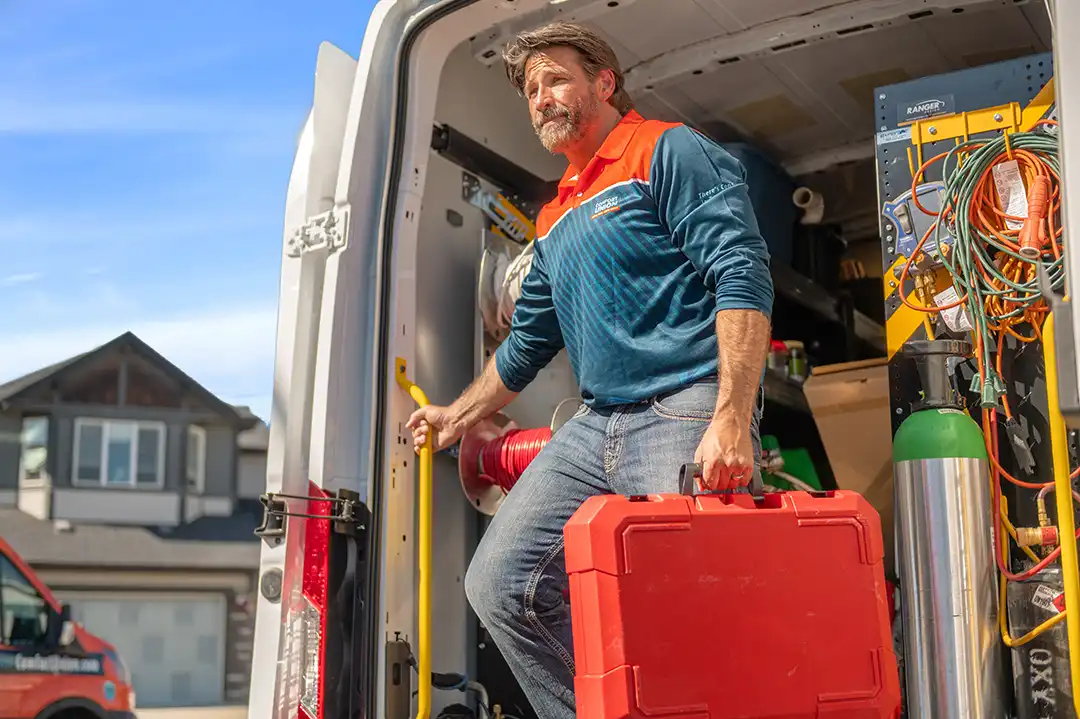
Never attempt complex furnace repairs yourself. Gas safety and proper calibration are critical. Comfort Union’s certified technicians inspect, diagnose, and replace flame sensors, ensuring compliance with safety codes. Regular furnace maintenance in Calgary can prevent repeated failures, extend furnace lifespan, and improve heating efficiency.
Frequently Asked Questions
Can I continue using my furnace if the flame sensor keeps failing?
Continuing to use a furnace with a failing flame sensor is unsafe. It may cause repeated shutdowns or risk unburned gas accumulation. Schedule an inspection promptly to prevent further issues.
How often should a flame sensor be cleaned in Calgary homes?
In Calgary, cleaning every 12–18 months is recommended, especially in older homes with dust accumulation or long heating seasons. Regular tune-ups reduce repeated failures and improve furnace reliability.
Are replacement flame sensors universal or brand-specific?
Most sensors are brand-specific and vary by furnace model. Using the correct part ensures proper alignment, safe operation, and warranty compliance. Always consult a licensed technician for replacements.
What is the lifespan of a typical flame sensor?
A flame sensor can last 5–10 years depending on furnace usage, environment, and maintenance. Regular inspections extend lifespan and prevent mid-winter failures.
Will a failing flame sensor affect my furnace efficiency?
Yes. A malfunctioning sensor can cause frequent cycling, reduce heat output, and increase gas consumption. Timely cleaning or replacement keeps your furnace running efficiently.

Fast, reliable furnace repair in Calgary. We diagnose and fix all makes and models to restore your home’s warmth quickly and safely.
Keep your system running smoothly with a professional furnace tune-up in Calgary. We clean, inspect, and optimize for peak efficiency and safety.

Breathe easier with professional furnace duct cleaning in Calgary. Remove dust, debris, and allergens for cleaner air and better system performance.